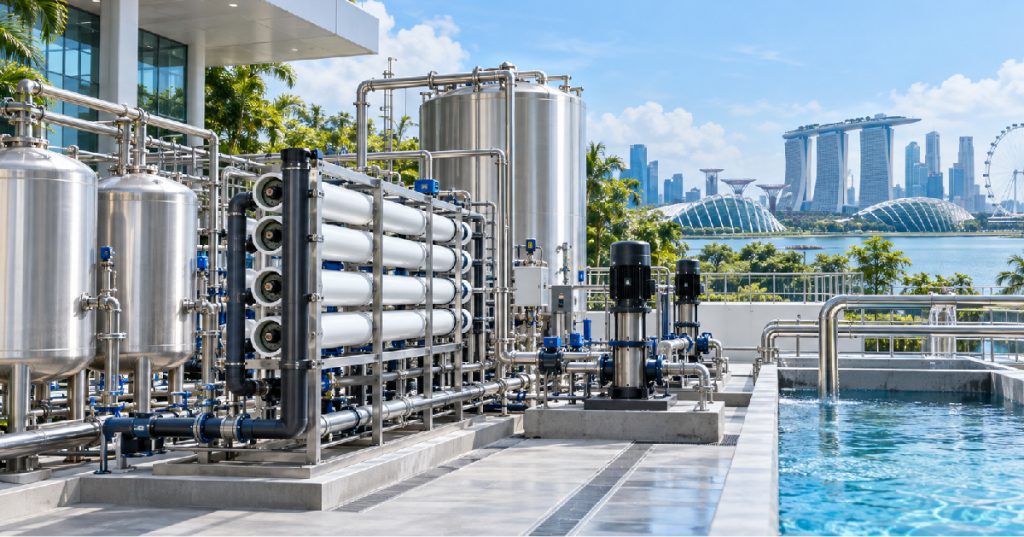

Singapore is globally recognized for its advanced approach to water sustainability and reuse. With limited natural water resources and high urban density, the country has adopted cutting-edge technologies to ensure efficient Wastewater Treatment and water recycling. Among these, Membrane Bio-Reactor Systems have emerged as a key solution for modern sewage treatment and industrial wastewater management.
By combining biological treatment with membrane filtration, Membrane Bio-Reactor (MBR) technology delivers superior water quality, making it ideal for applications where high treatment efficiency and water reuse are essential.
What Is a Membrane Bio-Reactor (MBR)?
A Membrane Bio-Reactor is an advanced wastewater treatment system that integrates biological processes with membrane filtration.
In this system:
- Microorganisms break down organic pollutants (biological treatment)
- Membranes filter out suspended solids and contaminants
This dual process ensures that treated water is of much higher quality compared to conventional wastewater treatment methods.
Membrane Bio-Reactor Systems are widely used in municipal sewage treatment plants and industrial wastewater treatment facilities.
Why Singapore Uses MBR Technology?
Singapore’s focus on water reuse and sustainable infrastructure has driven the adoption of advanced Membrane Bio-Reactor Systems.
Key reasons include:
- Limited availability of natural freshwater resources
- Strong emphasis on water recycling and reuse
- Need for compact treatment systems in urban areas
- Strict environmental and discharge standards
MBR technology supports these requirements by providing high-quality treated water suitable for reuse.
How Membrane Bio-Reactor Systems Work?
A typical Membrane Bio-Reactor System follows a multi-stage process:
-
Biological Treatment
In this stage, microorganisms degrade organic pollutants present in wastewater.
This reduces:
- Biological Oxygen Demand (BOD)
- Chemical Oxygen Demand (COD)
Biological treatment forms the foundation of effective Wastewater Treatment.
-
Membrane Filtration
After biological treatment, membranes separate treated water from solids and microorganisms.
The membrane acts as a physical barrier, removing:
- Suspended solids
- Bacteria and pathogens
- Fine particles
This ensures high-quality effluent suitable for reuse or discharge.
Applications of MBR Systems
Membrane Bio-Reactor Systems are used across various sectors in Singapore:
- Municipal sewage treatment plants
- Industrial wastewater treatment facilities
- Commercial buildings and complexes
- Hotels and residential communities
- Water recycling and reuse plants
These systems are particularly useful where space is limited and high treatment efficiency is required.
Benefits of Membrane Bio-Reactor Systems
Implementing Membrane Bio-Reactor Systems offers several advantages:
- High-quality treated water
- Reduced footprint compared to conventional systems
- Efficient removal of pollutants
- Suitable for water reuse applications
- Lower sludge production
- Stable and reliable operation
These benefits make MBR technology one of the most efficient solutions for modern Wastewater Treatment.
Supporting Sustainable Water Management in Singapore
MBR systems play a vital role in Singapore’s water sustainability strategy by enabling water reuse and reducing dependence on freshwater sources.
Treated water can be reused for:
- Industrial processes
- Cooling systems
- Landscape irrigation
- Utility applications
This approach helps conserve water resources and supports long-term sustainability.
Ion Exchange Solutions for Membrane Bio-Reactor Systems
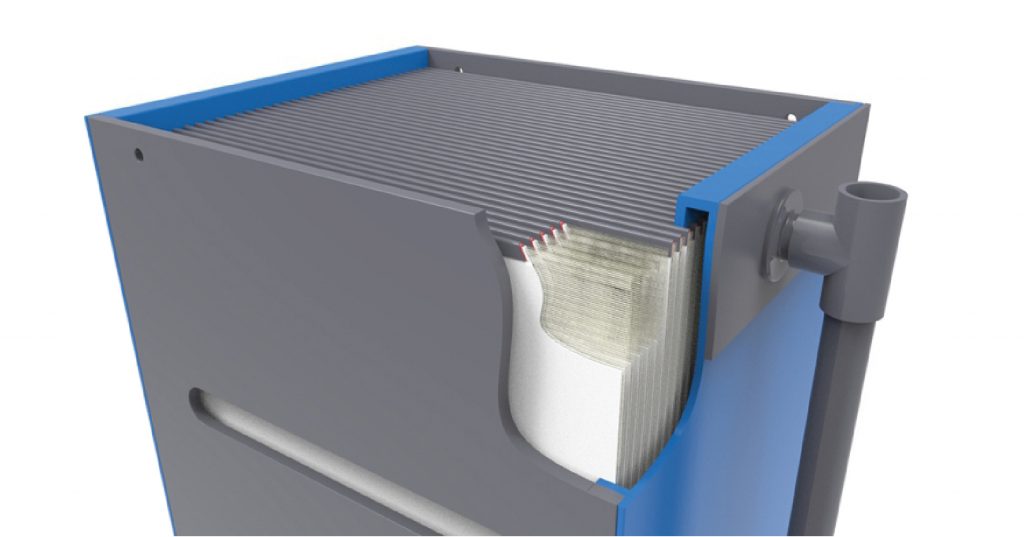
The introduction of membranes into wastewater and sewage treatment has eliminated the need for secondary clarification after aeration as well as for tertiary treatment. Membranes are immersed in the aeration tank itself, and treated water is drawn out through the membranes directly; hence, separation of mixed liquor suspended solids (MLSS) in the secondary clarifier and maintaining MLSS in the region of 4000 ppm (to prevent sludge settling issues in the secondary clarifier), etc. do not matter as MLSS separation is now done by the membranes. The membranes are normally constructed of PVDF and are kept clean by the scouring action of air on the membrane surface. Since the MLSS in the aeration tank does not have to be maintained at 4000 ppm, it can be taken up to 15-20,000 ppm, resulting in a significant reduction in the size of the whole plant.
Conclusion
Membrane Bio-Reactor Systems represent a significant advancement in Wastewater Treatment and sewage treatment technologies. By combining biological treatment with membrane filtration, MBR systems deliver superior water quality, making them ideal for water-scarce regions like Singapore.
As industries and municipalities continue to prioritize sustainability, adopting advanced Membrane Bio-Reactor Systems will play a key role in improving water reuse, reducing environmental impact, and ensuring efficient wastewater management.
FAQs
- What is a Membrane Bio-Reactor (MBR) system?
A Membrane Bio-Reactor is a wastewater treatment system that combines biological treatment with membrane filtration to produce high-quality treated water. - How is MBR different from conventional sewage treatment?
MBR systems use membranes to filter wastewater, resulting in better removal of solids and pathogens compared to conventional sewage treatment methods. - Where are Membrane Bio-Reactor Systems used?
MBR systems are used in municipal sewage treatment plants, industrial wastewater treatment, commercial buildings, and water recycling facilities. - What are the benefits of MBR technology?
MBR offers high treatment efficiency, compact design, better water quality, reduced sludge, and suitability for water reuse. - How does Ion Exchange support MBR-based wastewater treatment?
Ion Exchange provides advanced MBR systems, wastewater treatment plants, and integrated solutions for efficient sewage treatment and water recycling.