
Cooling systems are essential for maintaining stable operations across industries such as manufacturing, pharmaceuticals, data centres, power generation, and commercial facilities.
In Singapore, where industries operate in a highly regulated and resource-conscious environment, maintaining efficient cooling water systems is critical for reducing energy consumption, protecting equipment, and ensuring continuous operations.
Without proper treatment, cooling towers can experience scaling, corrosion, fouling, and microbial growth. These issues reduce heat transfer efficiency, increase maintenance requirements, and shorten equipment life.
Cooling tower water treatment helps industries maintain reliable cooling performance by controlling water chemistry, preventing deposits, and improving overall system efficiency.
Why is Cooling Tower Water Treatment Important?
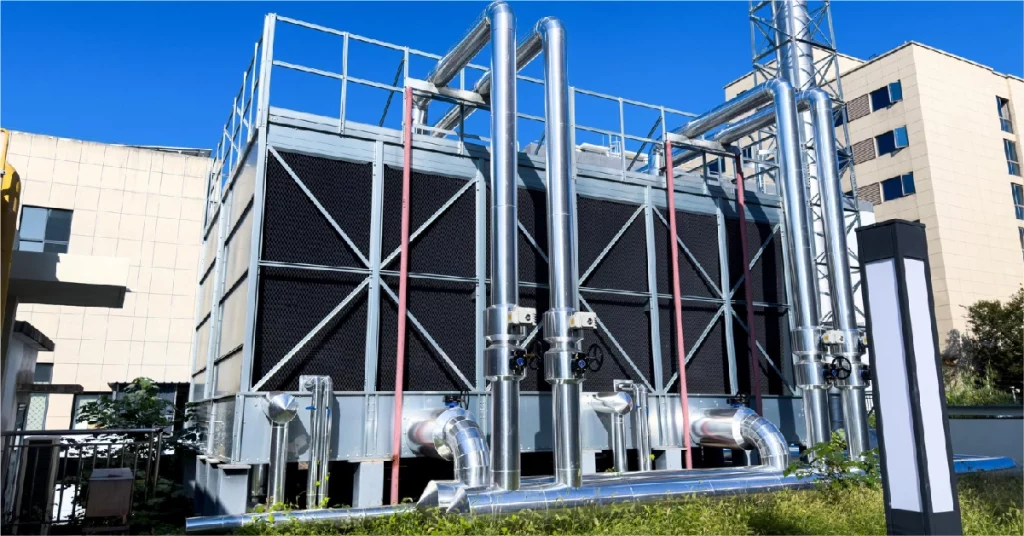
A cooling tower continuously circulates water to remove heat from industrial processes and building systems.
During operation, water evaporation increases the concentration of dissolved minerals and contaminants. Over time, this can result in:
- Scale formation on heat transfer surfaces
- Corrosion of metal components
- Microbial growth and biofilm formation
- Reduced cooling efficiency
- Increased energy consumption
- Equipment damage
A properly designed cooling tower treatment programme maintains water quality and helps the cooling system operate efficiently.
What Is Cooling Tower Water Treatment?
Cooling tower water treatment is a combination of physical, chemical, and monitoring processes designed to maintain cooling water quality.
The treatment programme controls:
- Mineral scaling
- Corrosion
- Biological growth
- Suspended solids
- Chemical imbalance
It typically includes the use of specialised water treatment chemicals, filtration systems, monitoring, and controlled dosing.
The objective is to maintain clean heat transfer surfaces and ensure reliable operation of the complete cooling water system.
How Does Cooling Tower Treatment Improve Industrial Efficiency?
1. Prevents Scale Formation
Scale forms when dissolved minerals such as calcium and magnesium become concentrated due to water evaporation.
Deposits on heat exchangers and cooling equipment act as insulation layers, reducing heat transfer efficiency.
Scale buildup can lead to:
- Higher energy consumption
- Reduced cooling capacity
- Increased operating costs
- Frequent cleaning requirements
Scale inhibitors used in cooling tower treatment help prevent mineral deposition and maintain efficient heat exchange.
2. Controls Corrosion
Cooling water systems contain metal components that can be affected by corrosion.
Corrosion may cause:
- Pipe damage
- Leakage
- Equipment failure
- Increased maintenance costs
Corrosion inhibitors form protective layers on metal surfaces and reduce the risk of equipment deterioration.
Effective corrosion control helps extend the operating life of cooling towers, chillers, pipelines, and heat exchangers.
3. Reduces Microbial Growth
Warm and continuously circulating water can encourage microbial activity.
Microbial growth may result in:
- Biofilm formation
- Blockages
- Reduced heat transfer
- Unpleasant odour
- Increased health risks
Biocides and microbiological control solutions help manage bacterial growth and maintain cleaner cooling systems.
Regular monitoring ensures that treatment remains effective while avoiding unnecessary chemical usage.
4. Improves Heat Transfer Efficiency
Clean heat exchange surfaces allow cooling systems to transfer heat more effectively.
By controlling scale, corrosion, and biological deposits, cooling tower treatment helps maintain:
- Stable cooling performance
- Lower energy consumption
- Better equipment efficiency
- Reduced downtime
For industries where cooling systems operate continuously, even small efficiency improvements can create significant operational savings.
5. Reduces Water and Chemical Consumption
Modern cooling tower treatment programmes focus on optimising water usage while maintaining system performance.
Effective control of water chemistry helps industries:
- Increase cycles of concentration
- Reduce blowdown requirements
- Minimise chemical wastage
- Improve water efficiency
This is especially important in water-conscious regions such as Singapore.
Role of Water Treatment Chemicals in Cooling Systems
Water treatment chemicals play an important role in maintaining cooling system performance.
Common chemical solutions include:
Scale Inhibitors
Prevent mineral deposits and maintain heat transfer efficiency.
Corrosion Inhibitors
Protect metal surfaces from corrosion caused by dissolved oxygen, salts, and water chemistry imbalance.
Biocides
Control microbial growth and prevent biofilm formation.
Dispersants
Help keep suspended particles separated and reduce fouling.
The right chemical programme depends on factors such as water quality, cooling tower design, operating conditions, and industry requirements.
Cooling Tower Treatment for Different Industries in Singapore
Manufacturing Industries
Manufacturing plants depend on cooling systems for production equipment, process cooling, and temperature control.
Effective treatment helps prevent unexpected shutdowns and maintain production efficiency.
Data Centres
Data centres require continuous cooling performance to maintain equipment reliability.
Cooling tower treatment helps ensure stable operation and protects critical infrastructure.
Pharmaceuticals
Pharmaceutical facilities require strict control of water quality to protect processes and maintain compliance.
Power Generation
Power plants rely on cooling systems for efficient heat removal.
Proper water treatment reduces scaling and corrosion in critical equipment.
Commercial Buildings
Hotels, malls, and office complexes use cooling systems for climate control.
Treatment programmes help maintain energy efficiency and reduce maintenance requirements.
Cooling Tower Water Treatment and Boiler Water Treatment
Many industrial facilities operate both cooling systems and boilers.
While cooling tower treatment focuses on preventing scale, corrosion, and microbial growth in cooling circuits, boiler water treatment focuses on maintaining steam system efficiency.
Boiler treatment helps control:
- Scale formation
- Corrosion
- Dissolved gases
- Water chemistry imbalance
Together, cooling and boiler treatment programmes support complete industrial water management.
Factors to Consider Before Selecting a Cooling Tower Treatment Programme
A successful treatment programme requires proper evaluation of:
Water Quality
Important parameters include:
- pH
- Hardness
- Conductivity
- Chlorides
- Dissolved solids
- Microbial activity
Cooling System Design
Treatment depends on:
- Cooling tower type
- Circulation rate
- Operating temperature
- Materials used
- Heat load
Operating Conditions
Factors such as water usage, seasonal changes, and production cycles affect chemical requirements.
Monitoring and Automation
Regular monitoring and automated dosing help maintain consistent treatment performance.
Ion Exchange Cooling Tower Water Treatment Solutions in Singapore
Ion Exchange provides customised cooling tower water treatment solutions for industries, commercial facilities, and infrastructure projects.
Its solutions include:
- Cooling water treatment chemicals
- Scale and corrosion control programmes
- Microbial control solutions
- Automated chemical dosing systems
- Water quality monitoring
With expertise in industrial water treatment, Ion Exchange designs treatment programmes based on water chemistry, cooling system conditions, and operational requirements.
The company also provides integrated solutions for boiler water treatment, wastewater treatment, and complete water management systems to help industries improve efficiency and reliability.
Conclusion
Efficient cooling systems are essential for industrial productivity, especially in regions like Singapore where operational reliability and resource efficiency are critical.
Cooling tower water treatment helps prevent scale, corrosion, and microbial growth while improving heat transfer efficiency and extending equipment life.
A properly designed treatment programme reduces maintenance requirements, optimises chemical usage, and supports long-term industrial performance.
Connect with Ion Exchange experts for customised cooling tower treatment solutions, advanced water treatment chemicals, and complete industrial water treatment programmes designed for efficient and reliable operations in Singapore.
FAQs
What is cooling tower water treatment?
Cooling tower water treatment is a process that uses chemicals, monitoring, and filtration methods to control scale, corrosion, microbial growth, and water quality issues in cooling systems.
Why is cooling tower treatment important for industries?
Cooling tower treatment helps maintain heat transfer efficiency, protect equipment, reduce energy consumption, and prevent costly maintenance issues.
What water treatment chemicals are used in cooling towers?
Common chemicals include scale inhibitors, corrosion inhibitors, biocides, and dispersants designed to maintain cooling water quality.
How does cooling tower treatment reduce operating costs?
By preventing deposits, corrosion, and microbial fouling, treatment improves system efficiency, reduces downtime, and extends equipment life.
Is cooling tower treatment different from boiler water treatment?
Yes. Cooling tower treatment focuses on cooling circuits, while boiler water treatment manages steam system water quality and prevents scale and corrosion in boilers.