
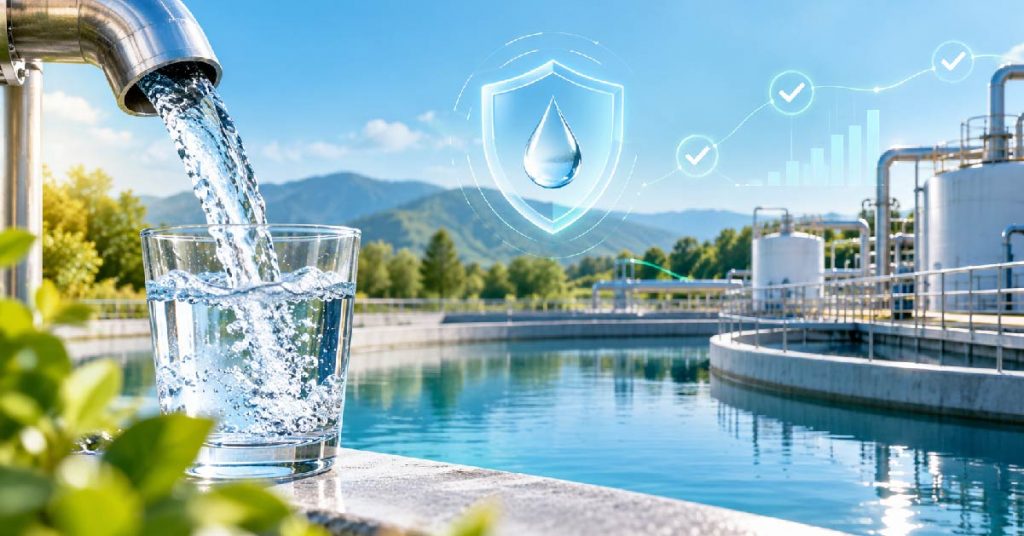
Safe drinking water is not something a treatment plant can confirm with one laboratory result at the end of the process.
By the time a failed sample appears, the underlying problem may already have moved through the system. A change in source-water quality, a treatment barrier operating outside its normal range, contamination in storage, or an issue within distribution can each affect the final water.
That is why drinking water safety plans emphasize prevention instead of final testing alone. The approach is simple: identify areas where water quality can be threatened, institute appropriate controls, and continually check to make sure that your controls are working effectively.
The WHO defines water safety plans as a precautionary approach taking into account a whole supply chain from catchment to consumer.
What Is a Water Safety Plan?
A water safety plan is a structured approach for managing risks that could affect the safety and acceptability of a drinking water supply.
The method is not intended to take the place of treatment or laboratory analysis. On the contrary, it integrates source protection, treatment, storage, distribution, operational monitoring, and emergency response into one management system.
This is a critical distinction.
With traditional compliance testing, water suppliers find out whether their sample passed a requirement at a certain time. A safety plan takes a different approach: it thinks of potential problems before obtaining the sample and takes preventive actions against those problems.
WHO supports this approach as an effective tool for consistent water safety management.
Step 1: Understand the Complete Water Supply System
Before carrying out a drinking water risk assessment, the team needs a clear picture of how water moves through the system.
This generally indicates the identification of the source, the intake, the treatment process, the storage tanks, the pumps, the distribution channels and the endpoints. Process flow diagrams are in order here but should depict the actual situation at present rather than the information found on a historical diagram.
Walk the system.
Operators are usually aware of details that are not in engineering documents, such as a tank that has low throughput occasionally, an intake affected by strong rains, or a dosing stage that becomes problematic during high throughput.
Therefore, a drinking water safety plan can be much more useful if it has operational reality included.
Step 2: Identify Hazards and Events That Could Cause Them
The next stage is not simply to produce a long list of contaminants.
Instead, consider both the hazard and the event that may introduce or increase it.
Microorganisms may enter because of contamination at the source. Turbidity may rise sharply after intense rainfall. Chemical contamination may result from an upstream discharge. Loss of disinfectant residual could create vulnerability within storage or distribution.
Infrastructure matters as well. Cross-connections, damaged storage facilities, stagnant sections and maintenance work can introduce risks even when treatment itself is performing correctly.
WHO’s framework calls for hazards and hazardous events to be identified across the entire supply chain and then assessed according to risk.
Step 3: Prioritise Risks Instead of Treating Everything Equally
Not every identified hazard deserves the same level of attention.
Risk assessment of drinking water is useful only when both the probability of an event and the severity of its impact are taken into account. By doing this, it is possible to differentiate between problems that can be managed and high-priority risks that demand intervention.
For instance, a facility might have to deal with occasional high turbidity in the water after heavy rain. In this case, the higher priority should be given to potential turbidity changes, which could affect the subsequent disinfection of water. Instead, minor changes in operation of the facility might not be critical.
The aim is to develop not a perfect risk map, but a comprehensive understanding of areas where a limited amount of operational effort can bring maximum results.
This means that we can make drinking water safety management much easier than it has been.
Step 4: Identify and Validate the Control Measures
Once the priority risks are understood, look at what prevents them from reaching the consumer.
A control measure may be source protection, coagulation and filtration, membrane treatment, disinfection, secure storage or maintaining suitable conditions within the distribution system.
The important question is whether the control measure can actually manage the risk assigned to it.
For instance, installing treatment equipment is not enough. The team needs to understand the conditions under which that treatment remains effective.
This is where operating limits become valuable. Flow, turbidity, disinfectant concentration, membrane performance or another process indicator may show whether a barrier remains under control.
Step 5: Build Water Quality Monitoring Around Decisions
Water quality monitoring should tell operators when action is required, not simply generate more data.
That means deciding what needs to be monitored, where, how often and what response follows an abnormal result.
WHO places great importance in operational monitoring because it provides quick feedback on whether necessary controls are working as they should. If the performance falls outside specified limits, the operators can take action in time for drinking-water safety to remain safe.
Singapore presents a good example of the general principle. PUB has established drinking-water quality monitoring from source to tap that includes laboratory tests and online sensors through treatment processes and service reservoirs. Singapore’s present policy on drinking water is based on the WHO Guidelines for Drinking-water Quality.
It must be noted that the process is rather different at a single facility, although the concept remains the same.
Step 6: Decide What Happens When Something Goes Wrong
A monitoring alarm without an agreed response is only half a control system.
Every important deviation should have a practical response attached to it. Who gets notified? Does production continue? Should a treatment stage be adjusted? Does water need to be isolated, retested or prevented from entering distribution?
These decisions are easier to make before an incident than during one.
A strong water safety plan therefore includes management procedures for both normal operation and abnormal events. WHO also recommends reviewing and revising the plan following significant incidents.
Step 7: Verify That the Plan Works
Operational monitoring and verification serve different purposes.
Operational monitoring asks whether the control measures are behaving correctly right now. Verification asks whether the complete system is achieving the intended drinking water quality.
This may include compliance sampling, microbiological and chemical analysis, internal reviews, inspections and examination of operating records.
Together, they provide a more useful picture than either process data or final testing alone.
Drinking Water Quality Management Is a Continuous Process
A common mistake is to treat the safety plan as a document produced for an audit and then placed on a shelf.
Changes occur in water supply systems.
Quality and sources of water differ. Equipment gets older. Treatment capacity may change. New pollution types come along. Distribution systems may be fixed or expanded. Climate change has effects on risk profile.
The latest recommendations given by WHO on water safety planning include continuous improvement and better consideration of climate resilience.
Therefore, good management of drinking water needs regular revising instead of one-time approval.
Where Ion Exchange Can Support the Process
A drinking water safety plan ultimately depends on reliable treatment barriers and an operating system capable of maintaining them.
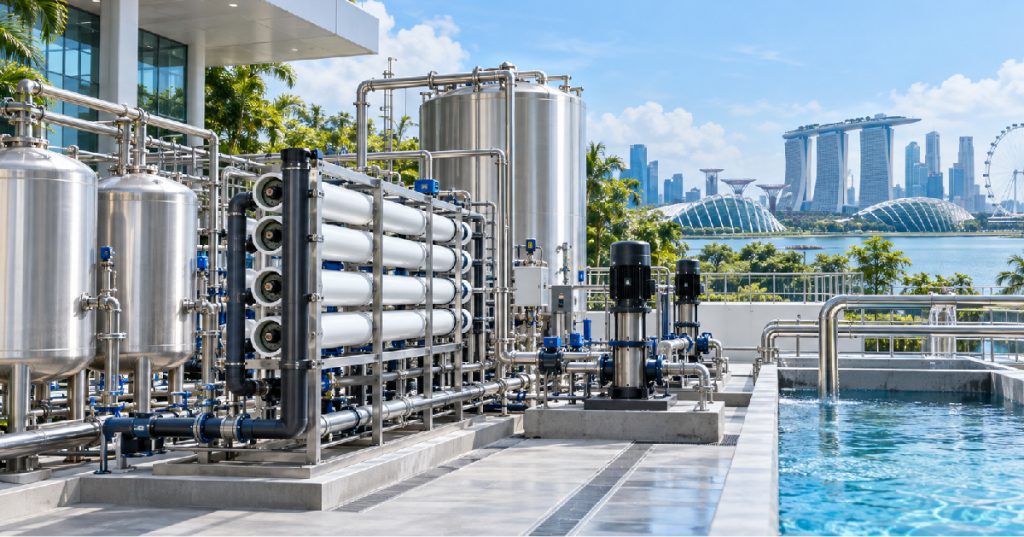
Ion Exchange Singapore provides drinking-water treatment solutions involving technologies such as reverse osmosis, ultrafiltration, electrochlorination, ozonation and ion exchange resins for the treatment of surface water and groundwater.
Among the broad range of services offered are water treatment engineering, operational and maintenance services, auditing and consulting, provision of consumables and support of water treatment facilities.
The significance of such broad scope of activities is obvious, because getting safe drinking water is not usually the result of using just one piece of equipment; for it to be possible, it would be necessary to make all technologies for treatment, monitoring, maintenance and operation work together effectively.
The potential links for further exploration of the above-mentioned topic may be made to the following sections of the web site: Drinking Water Treatment, Water Treatment Plants, Reverse Osmosis, Ultrafiltration, Operations & Maintenance, Audits & Consultancy.
Final Thoughts
A reliable drinking water safety plan begins long before water reaches the final sampling point.
Map the system. Find the hazards. Rank the real risks. Confirm the barriers that control them. Monitor those barriers closely and establish a response before something moves outside the acceptable range.
That approach changes water quality management from reactive testing to active prevention.
For organisations reviewing treatment reliability, monitoring requirements or drinking water quality management, connect with Ion Exchange Singapore to assess the treatment system and develop a more dependable approach to water quality.
FAQs
What is a drinking water safety plan?
It is a preventive risk-management framework used to identify and control threats to drinking-water quality from the water source through treatment, storage and distribution.
What are the main steps in a water safety plan?
The process includes understanding the system, identifying hazards, assessing risks, establishing control measures, defining operational monitoring, verifying performance and regularly reviewing the plan.
Why is water quality monitoring important?
Water quality monitoring provides evidence that treatment and other control measures are operating correctly. Operational monitoring can also identify problems early enough for corrective action.
What is a drinking water risk assessment?
A drinking water risk assessment examines potential hazards, how they might enter or affect the water supply, how likely they are to occur and the possible consequences.
How often should a water safety plan be reviewed?
It should be reviewed periodically and whenever significant changes, incidents, new hazards or treatment modifications affect the water supply system.