
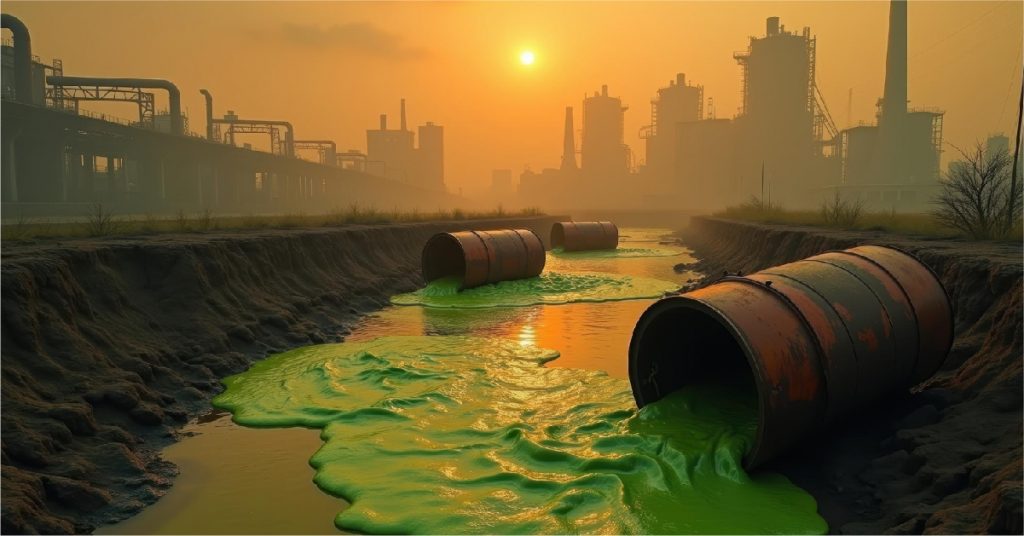
As Singapore strengthens its position as a global hub for refining, petrochemicals, and offshore engineering, smart water management has become central to operational efficiency. One of the biggest challenges faced by upstream and midstream operators is managing produced water — the contaminated water that flows out alongside crude oil and gas.
Traditionally viewed as a waste stream, produced water is now emerging as a valuable resource thanks to advancements in produced water treatment technologies. With the right systems, Singapore’s energy sector can turn waste into profit by recovering water, reducing disposal costs, and improving sustainability.
What Is Produced Water and Why Does It Matter?
Produced water is the largest byproduct of oil and gas operations. It typically contains:
- Dissolved salts
- Hydrocarbons
- Suspended solids
- Chemicals used in drilling and extraction
- Heavy metals
- Biological contaminants
If not properly managed, this wastewater can pose environmental, operational, and regulatory challenges. Modern produced water treatment in oil and gas industry operations is now focused on maximizing resource recovery while meeting increasingly strict environmental standards.
Treatment of Produced Water: The Shift Toward Value Creation
Advanced technologies have transformed the treatment of produced water from a simple disposal process into an opportunity for reuse and cost reduction.
Today’s systems integrate physical, chemical, and biological processes that:
- Remove free and emulsified oil
- Reduce suspended particulates
- Control dissolved contaminants
- Meet discharge or reuse standards.
- Lower overall operational expenditure
Modern solutions enable operators to transform produced water into a reusable asset for enhanced oil recovery (EOR), cooling systems, irrigation (where allowed), or safe discharge.
Types of Produced Water Treatment Technologies
To handle the complex composition of oilfield water, operators rely on multiple stages of treatment. These technologies are usually part of a comprehensive produced water treatment package engineered for site-specific conditions.
1. Primary Treatment — Oil Removal
Technologies include:
- API separators
- Corrugated Plate Interceptors (CPI)
- Induced Gas Flotation (IGF)
These systems remove bulk oil droplets and suspended solids.
2. Secondary Treatment — Fine Polishing
Used to remove emulsified oil and smaller particulates via:
- Coalescers
- Walnut shell filters
- Hydrocyclones
3. Tertiary Treatment — Advanced Purification
Required for reuse or strict discharge limits:
- Ultrafiltration (UF)
- Nanofiltration (NF)
- Reverse Osmosis (RO)
- Advanced oxidation processes
This ensures compliance with stringent environmental norms in Singapore.
4. Sludge & Byproduct Management
Minimizing disposal costs through dewatering, drying, and beneficial reuse options.
Each oil well produced water treatment system is custom-designed based on water chemistry, flow requirements, and end-use goals.
The Business Case for Produced Water Reuse
Singapore’s focus on sustainability and circular economy initiatives has pushed industries to reduce freshwater consumption and recycle more. For the oil and gas sector, the benefits of reuse are clear:
1. Major Cost Savings
Reduced disposal fees and freshwater intake cut operational costs across the board.
2. Increased Operational Efficiency
Cleaner water boosts equipment life, improves EOR efficiency, and reduces corrosion issues.
3. Stronger ESG Performance
Supporting Singapore’s environmental commitments, including water conservation and a reduced carbon footprint.
4. Compliance With Local Regulations
Advanced oil and gas produced water treatment systems ensure that operators meet NEA and PUB discharge norms.
Produced Water Treatment in the Oil and Gas Industry: Singapore’s Advantage
Singapore’s energy and petrochemical ecosystem demands reliability, innovation, and strict compliance. The country’s forward-thinking environmental stance and focus on advanced infrastructure make it an ideal location for integrating modern produced water management solutions.
With offshore fields, FPSOs, refining units, and petrochemical plants requiring efficient water handling, a robust produced water treatment package supports:
- Higher uptime
- Cleaner operations
- Regulatory compliance
- Sustainable resource usage
Ion Exchange: Delivering Smart Produced Water Treatment Solutions
Ion Exchange brings decades of expertise in engineering and optimizing advanced produced water treatment systems across Asia and the Middle East. Our solutions help clients convert oilfield wastewater into a resource that drives profitability and sustainability.
Onshore Produced Water Treatment
Amal Steam, PDO Oman
The PDO-Amal steam development project in South Oman is one of the largest brownfield enhanced oil recovery development projects. Ion Exchange & Company LLC was selected as the EPC contractor against stiff 3 international competition for a 9900 m /d steam injection package that required exclusive Ion Exchange technology for treating produced water. The produced water had oil, high total dissolved solids, and hardness. The treated water after a unique oil removal system passes through two stages of specialty ion exchange resin columns, complete with an automatic skid-mounted brine dosing system to reduce hardness. This treated water is used to produce steam for reinjection into heavy oil fields to boost the extraction rate of oil without scaling oil crevices. The project was successfully commissioned and continues to be operated and maintained by us, along with several water treatment plants installed in the facility.
Cairn India Limited, Barmer
M/s Cairn India Ltd. awarded an EPC contract to Ion Exchange (India) Ltd. for constructing a produced water treatment plant for reinjecting sulfate-free water for its large Mangala and Bhagyam wells.
Ion Exchange’s lump-sum turnkey contract includes an elaborate pre-treatment system followed by a novel dual-membrane ltration system comprising advanced nano- ltration and reverse osmosis process to 3 treat 2315 m /h of produced water. Supplied completely with CIP, the system is particularly designed for reducing sulphur concentration from 500 ppm to < 10 ppm, whilst minimizing reject in the membrane treatment process to <10%. The reject handling system consists of a high-pressure pipeline and pumps, including booster pumps for reject disposal into disposal wells, which are located at a designated reject disposal well pad. The pipeline system is complete with associated pigging facilities at both dispatch & receiving ends.
Conclusion
Produced water is no longer just a byproduct — it’s a strategic asset. With modern produced water treatment in oil and gas industry systems, Singapore’s oil and gas operators can achieve cleaner operations, lower costs, and improved sustainability. Turning waste into profit is now a reality through advanced filtration, separation, and reuse technologies.
Connect with Ion Exchange experts today to explore the right produced water treatment package for your facility and unlock long-term value from every drop of oilfield water.